
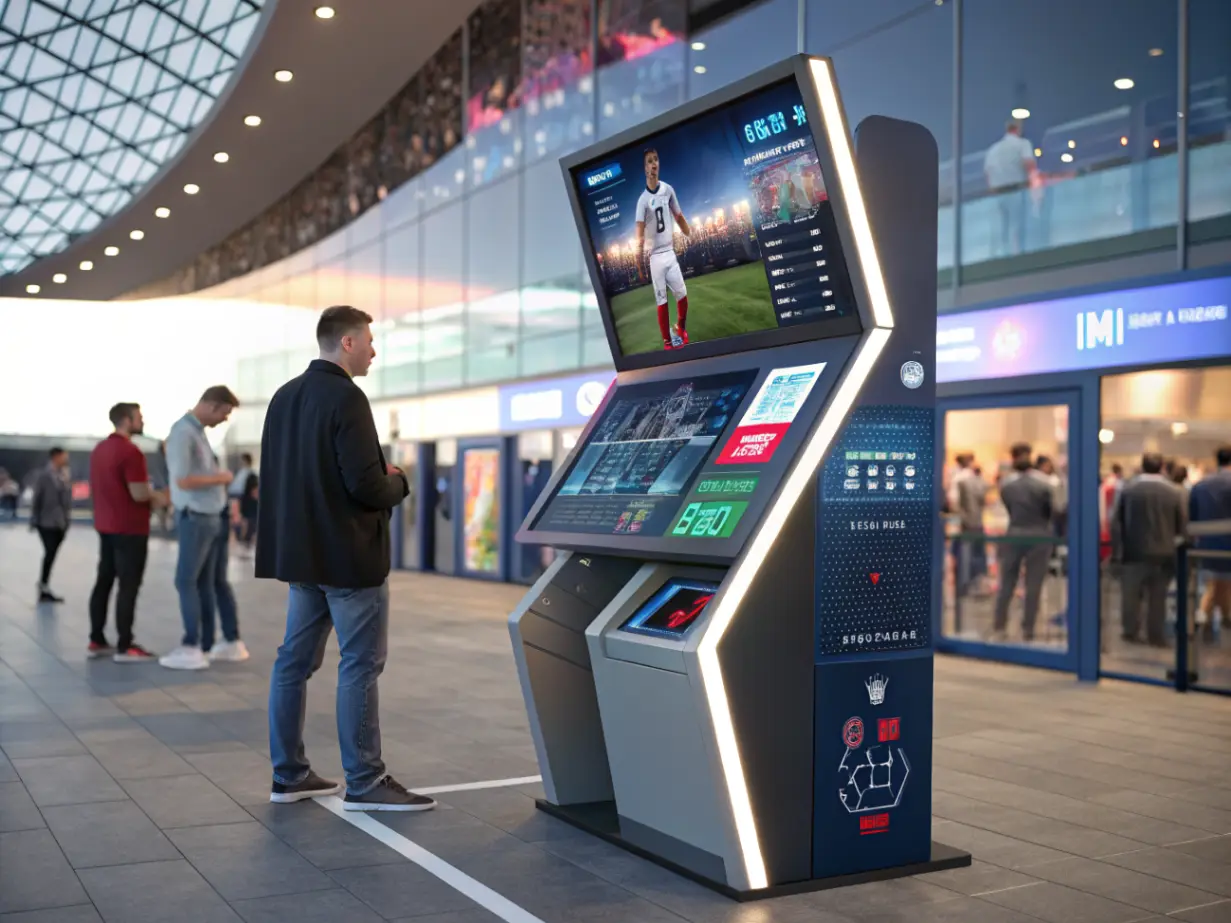
Sports betting in 2026 looks very different from what it was just a few years ago. Artificial intelligence has moved from being a background tool used by large analytics companies to becoming a central part of the betting experience itself. Bettors now interact with prediction engines, automated research assistants, personalized odds feeds, and live recommendation systems almost every time they open a sportsbook app.
The biggest shift is not only technological. AI has changed the speed of betting markets, the way bookmakers manage risk, and the expectations of ordinary users. Information that once took hours to process now moves through betting models in seconds. Injury news, tactical changes, weather conditions, player fatigue, and even emotional momentum can instantly affect prices. At the same time, bettors have access to tools that previously belonged only to professional syndicates.
This transformation has created a more data-driven industry, but it has also raised new concerns about fairness, addiction, transparency, and market manipulation. The balance between human intuition and machine prediction has become one of the defining conversations in modern sports betting.
Ai-driven prediction models are becoming more accurate
Modern betting models in 2026 no longer rely only on traditional statistics like goals scored, possession percentage, or win-loss records. AI systems process enormous streams of information simultaneously, including tracking data, player movement patterns, historical matchup trends, referee tendencies, weather simulations, and social sentiment around teams and athletes.
Machine learning models are especially effective in identifying patterns that humans tend to miss. A football team may appear strong on paper, but AI systems can detect hidden warning signs such as declining sprint intensity, travel fatigue, or tactical mismatches against certain formations. In basketball, betting models can predict how second-unit rotations influence late-game scoring efficiency. In tennis, AI can analyze how players perform under different humidity levels or court speeds.
This level of detail has made sportsbooks more efficient. Odds adjust faster and react more precisely to real-world events. Sharp bettors who previously relied on manual research now compete against systems that absorb millions of data points in real time.
The relationship between sportsbooks and bettors has also changed because of predictive automation. Many betting platforms now provide AI-generated match previews directly inside their apps. Instead of simply showing odds, they explain probability ranges, tactical factors, and likely game scenarios. Some even simulate entire matches thousands of times before kickoff.
A growing number of bettors use AI assistants to build betting slips. These tools compare market prices across bookmakers, identify statistical value, and suggest stake sizes based on risk tolerance. Casual users who once made emotional decisions now approach betting with more structured analysis.
The rapid evolution of predictive technology can be seen across several areas of the industry.
| Area of betting | How AI is used in 2026 | Main impact |
|---|---|---|
| Live betting | Real-time probability recalculations during games | Faster and more dynamic odds |
| Player props | Performance simulations based on tracking data | More detailed betting markets |
| Risk management | Automated fraud and arbitrage detection | Lower bookmaker exposure |
| Personalized betting | AI-curated recommendations for users | Higher engagement |
| Injury analysis | Predictive modeling of player condition | Earlier market adjustments |
| Market monitoring | Detection of unusual betting patterns | Improved integrity protection |
These systems are becoming more sophisticated because they learn continuously. Every match, every player action, and every betting trend feeds back into the algorithms. The result is an environment where markets become increasingly difficult to beat through simple intuition alone.
At the same time, accuracy does not mean certainty. AI still struggles with emotional variables that define sports. A locker-room conflict, a coach’s unexpected tactical gamble, or a sudden shift in confidence can still break statistical expectations. That unpredictability remains one of the reasons sports betting continues to attract millions of people.
Live betting is being transformed by real-time data
Live betting has become the fastest-growing segment of the industry largely because AI can process changing conditions almost instantly. In the past, bookmakers updated odds manually or with relatively simple automated systems. Today, AI-driven engines react to live events within fractions of a second.
A football match now generates enormous amounts of usable information. Cameras track player positioning, acceleration, pressing intensity, defensive spacing, and ball progression patterns. AI systems translate those movements into predictive outcomes almost immediately. If a team begins losing midfield control or shows signs of physical exhaustion, the betting markets react before many viewers even notice the shift.
This has created a much more immersive betting environment. Users no longer wait for halftime to make decisions. They interact with constantly evolving markets during every stage of the match.
Several trends define the current live betting landscape:
• AI identifies momentum swings faster than human traders can react.
• Automated systems generate micro-markets around individual moments in games.
• Voice-based assistants help bettors place wagers during live action.
• Streaming platforms integrate predictive betting overlays directly into broadcasts.
• Personalized alerts notify users about value opportunities in real time.
One of the biggest developments in 2026 is predictive event betting. AI systems estimate the likelihood of highly specific events occurring within short time windows. Bettors can wager on whether a team will score in the next five minutes, whether a player will attempt a shot before halftime, or whether a basketball possession will end with a three-point attempt.
This level of granularity creates excitement, but it also increases volatility. Fast-moving markets leave little time for emotional reflection. Regulators in several countries have already expressed concerns that hyperactive live betting environments may encourage impulsive behavior.
Sportsbooks are responding by introducing AI-powered responsible gambling systems. These systems monitor user behavior patterns and can detect signs of harmful betting activity. If a user suddenly increases stakes dramatically, chases losses aggressively, or places unusually rapid wagers, the platform may trigger warnings or temporary restrictions.
The combination of live analytics and behavioral monitoring shows how deeply AI has become integrated into every part of the industry. Betting is no longer just about odds; it is about continuous interaction between users, algorithms, and real-time information flows.
Sportsbooks are using ai to protect profits and detect risk
Artificial intelligence has become essential for bookmakers because betting markets move too quickly for manual supervision alone. Modern sportsbooks handle millions of bets across thousands of simultaneous events, and AI systems manage much of the operational workload behind the scenes.
Risk management is one of the most important applications. Bookmakers use machine learning models to identify suspicious betting activity, unusual market movement, and coordinated wagering patterns. These systems can detect when groups of bettors attempt to exploit pricing inefficiencies or insider information.
Fraud prevention has improved significantly because AI can compare betting behavior across multiple variables at once. It tracks account histories, device usage, geographic data, transaction patterns, and timing irregularities. Suspicious activity that once required human investigation can now be flagged instantly.
Another major area is odds optimization. Sportsbooks in 2026 rarely rely on static pricing models. AI continuously adjusts lines based on betting volume, market sentiment, injury updates, and exposure levels. The goal is not simply to predict outcomes accurately but to balance risk across both sides of a market.
This creates an interesting tension between sportsbooks and professional bettors. Skilled gamblers increasingly use AI tools themselves, which means bookmakers must constantly improve their systems to stay ahead. The relationship has become an arms race built around data quality, processing speed, and model efficiency.
Some sportsbooks are also using generative AI to improve customer interaction. Users can ask natural-language questions like:
“Which NBA player prop has the strongest statistical value tonight?”
“Show me teams with high scoring trends in rainy weather.”
“Compare this week’s Champions League odds with historical averages.”
Instead of searching through menus manually, bettors receive conversational answers powered by AI assistants. This has simplified access to advanced analytics and made betting platforms more user-friendly.
At the same time, automated personalization has increased concerns about ethical targeting. Betting apps now understand user preferences in extraordinary detail. They know which sports attract the most attention, what types of bets users prefer, how long they stay active during sessions, and what promotional messages generate the highest response rates.
Critics argue that these systems can encourage unhealthy betting habits if used irresponsibly. Personalized recommendations may blur the line between entertainment and manipulation, especially for vulnerable users.
The industry faces growing pressure to balance commercial growth with responsible design. AI can maximize engagement extremely effectively, but regulators increasingly expect companies to use the same technology to protect consumers rather than simply increase revenue.
Bettors are relying more on automation and smart assistants
The average bettor in 2026 has access to analytical capabilities that would have seemed impossible a decade ago. AI-powered research platforms can instantly summarize injuries, tactical trends, historical matchups, and betting market movement.
Many users now build entire betting strategies around automated systems. Some create personalized models that identify value bets according to specific rules. Others subscribe to AI-driven prediction services that generate recommendations across multiple sports.
This shift has changed the culture of betting communities. Discussions that once focused heavily on intuition or “gut feeling” now revolve around expected value, probability efficiency, and statistical modeling. Even casual bettors increasingly understand concepts that were once limited to professional analysts.
Social media has also evolved alongside AI-driven betting. Prediction bots publish automated forecasts before matches begin. Community platforms compare machine-generated models against human expert picks. Some influencers use AI-generated simulations to explain tactical scenarios visually.
Despite the growing influence of automation, many bettors still value human interpretation. Algorithms can process data, but they do not experience emotion, rivalry pressure, or psychological tension in the same way people do. Sports remain deeply human events, and many successful bettors combine AI research with personal judgment rather than relying entirely on software.
The most effective bettors in 2026 tend to follow several habits:
• They use AI tools for research but avoid blind automation.
• They compare multiple prediction models instead of trusting a single source.
• They focus on long-term probability rather than short-term emotion.
• They understand that even advanced systems experience variance and losing streaks.
• They treat betting as controlled entertainment rather than guaranteed income.
One of the more controversial developments is the rise of semi-automated betting bots. These systems place wagers automatically when specific conditions appear in the market. Some operate legally within platform rules, while others violate sportsbook policies by exploiting timing advantages.
Regulators are still struggling to define clear boundaries around automated wagering. Questions about fairness and accessibility continue to grow as technology becomes more advanced. Wealthier bettors and professional syndicates can afford stronger analytical systems, potentially widening the gap between casual users and elite operators.
This technological divide mirrors broader trends across digital industries. Access to superior data and faster processing often creates competitive advantages that are difficult for ordinary users to overcome.
Regulation and ethics are becoming central issues
The rapid adoption of AI has forced governments and sports organizations to rethink how betting markets should operate. Concerns about transparency, fairness, addiction, and match integrity have become far more serious as predictive systems gain influence.
One major issue involves explainability. Many AI models operate as black boxes, producing predictions without clearly showing how conclusions were reached. Regulators increasingly want sportsbooks to explain how automated pricing systems function, especially in heavily regulated markets.
Another concern involves player data. Modern predictive systems rely on detailed biometric and tracking information collected during games and training sessions. Questions about privacy rights and data ownership are becoming more important each year.
Athletes themselves have mixed feelings about the rise of AI-driven betting ecosystems. Some appreciate the increased attention and commercial growth surrounding sports. Others worry that constant statistical surveillance reduces players to data points rather than human competitors.
Match-fixing prevention has become another key battleground. AI systems are now used extensively to monitor suspicious betting patterns across global markets. Unusual wagers, abnormal line movement, or coordinated activity can trigger automated alerts before investigations even begin.
This technology has already helped uncover several lower-tier football and tennis scandals in recent years. Smaller competitions often remain vulnerable because athletes may face financial pressure and limited oversight. AI monitoring tools give integrity organizations stronger capabilities to detect irregularities quickly.
The ethical debate extends beyond integrity and privacy. Critics argue that AI-enhanced betting products can become psychologically addictive because they create constant engagement loops. Personalized notifications, predictive recommendations, and rapid live markets keep users connected almost continuously.
Supporters counter that AI can also improve consumer protection. Automated monitoring systems are capable of identifying problematic behavior earlier than traditional human oversight. Some betting operators now intervene proactively when risk patterns appear.
Several governments in Europe and Asia are introducing stricter standards around AI transparency and responsible gambling protections. The industry increasingly understands that long-term sustainability depends on maintaining public trust.
The future of sports betting will be shaped by human and machine collaboration
Artificial intelligence has already transformed sports betting in ways that seemed futuristic only a few years ago. Markets react faster, predictions are more sophisticated, and users interact with betting platforms through increasingly personalized systems. The entire ecosystem now depends heavily on algorithms, automation, and real-time analytics.
Yet the future of betting will not belong entirely to machines. Sports remain unpredictable because human emotion, pressure, confidence, rivalry, and creativity continue to influence outcomes in ways that no model can fully capture. AI can improve probability estimates, but it cannot eliminate uncertainty.
That balance between data and unpredictability is exactly what keeps sports compelling. Bettors may rely on advanced tools, but the emotional side of competition still matters. Fans continue to believe in underdogs, dramatic comebacks, and unexpected moments that break statistical expectations.
The next stage of the industry will likely focus on integration rather than replacement. Human expertise and AI-driven analysis will increasingly work together. Bettors who understand both technology and the emotional realities of sports will probably adapt best to the changing environment.
Sportsbooks, regulators, and technology companies also face important decisions about ethics, transparency, and responsible design. AI has enormous commercial power, but its long-term success depends on whether the industry can use that power responsibly.
The betting landscape of 2026 is smarter, faster, and more connected than ever before. At the same time, it is still driven by the same core attraction that has always defined sports: uncertainty. No matter how advanced predictive systems become, there will always be room for surprise, instinct, and the unpredictable drama that makes competition worth watching.